You bought those mushrooms with good intentions. The spinach was going to be tonight's side dish. That half-lemon was essential for tomorrow's recipe.
Now they're science experiments in your crisper drawer.
The average UK household throws away roughly £40 worth of food every single month—most of it fresh produce that simply got forgotten. That's nearly £500 a year vanishing into your bin, and it's not because you're careless or wasteful.
It's because your fridge is working against you.
The Psychology of Fridge Blindness
"Fridge blindness" is the phenomenon where perfectly good food becomes invisible the moment you close the door. Researchers call it 'inattentional blindness'—when our brains filter out what we're not actively looking for.
You open the fridge looking for dinner inspiration, your eyes scan the top shelf, and your brain simply doesn't register the bag of rocket hiding behind the oat milk. The mushrooms tucked in the back drawer might as well not exist.
Meanwhile, supermarkets have entire teams dedicated to product visibility—endcaps, eye-level placement, strategic lighting. Your fridge has none of this.
Chef's Reframe: Your fridge isn't a storage unit. It's a shop floor. Treat it like one.
The Three Zones That Stop Waste
Professional kitchens use a FIFO system: First In, First Out. Home cooks need something simpler.
Enter the three-zone method:
Zone 1: The Use-First Shelf
Designate your top shelf or most visible spot as the 'eat me first' zone. Anything that's been opened, anything approaching its use-by date, or leftovers from yesterday live here.
Every time you open the fridge, this shelf screams for attention. It becomes your first stop when deciding what to cook.
Zone 2: The This-Week Zone
Middle shelves hold fresh produce and ingredients you've bought for specific meals this week. These items are still in their prime but need using within 3–5 days.
Keep items visible—no stacking jars in front of vegetables. If you can't see it, you won't cook it.
Zone 3: The Staples Shelf
Condiments, pickles, longer-life items like tofu or plant milk that's unopened—these live at the bottom or in the door. They're your safety net, not your dinner plan.
The Sunday Night Reset
Once a week, take five minutes to audit what's actually in your fridge. Not a deep clean—just a reality check.
Pull everything forward. Move older items to Zone 1. Bin anything genuinely off. Take a photo on your phone if it helps you remember what you have before your next shop.
This single habit can cut your waste by half.
The 'Rescue Meal' Protocol
Even with zones and resets, life happens. You get busy, plans change, and suddenly Thursday's courgette is looking sad.
That's when you need a rescue meal—a flexible, throw-it-all-in recipe that transforms odds and ends into dinner.
Here are three formulas that work every time:
1. The Big Soup
Sauté an onion and garlic. Add any vegetables that need using—chop them small so they cook evenly. Cover with vegetable stock, simmer until soft, then blend half for body. Season aggressively.
Wilted spinach? Soft tomatoes? The tail-end of a bag of carrots? They all work.
2. The Sheet-Pan Traybake
Cube everything: sweet potatoes, peppers, courgettes, mushrooms, red onion. Toss with olive oil, smoked paprika, garlic powder, and salt. Roast at 200°C for 30 minutes.
Serve over grains, toss with pasta, or stuff into wraps. The caramelisation hides a multitude of 'almost past it' sins.
3. The Fried Rice Reset
Day-old rice is ideal, but fresh works too. Fry with whatever vegetables you have, add soy sauce, a splash of sesame oil, and frozen peas if you're short on veg.
Crispy tofu, spring onions, a squeeze of lime—suddenly your 'nothing in the fridge' panic becomes a 15-minute dinner.
When to Freeze Instead of Fridge
Bought too much fresh ginger? Freeze it whole and grate from frozen. Leftover herbs going limp? Chop and freeze in ice-cube trays with a little water or oil.
Bread, bananas (for smoothies), and even leafy greens for cooking can go straight to the freezer if you know you won't use them in time.
Your freezer is a pause button. Use it ruthlessly.
The Real Cost of Ignoring Your Fridge
£40 a month doesn't sound catastrophic until you realise it's a gym membership, a nice meal out, or a weekend away every year. It's also the environmental cost—the water, energy, and land used to grow food you never ate.
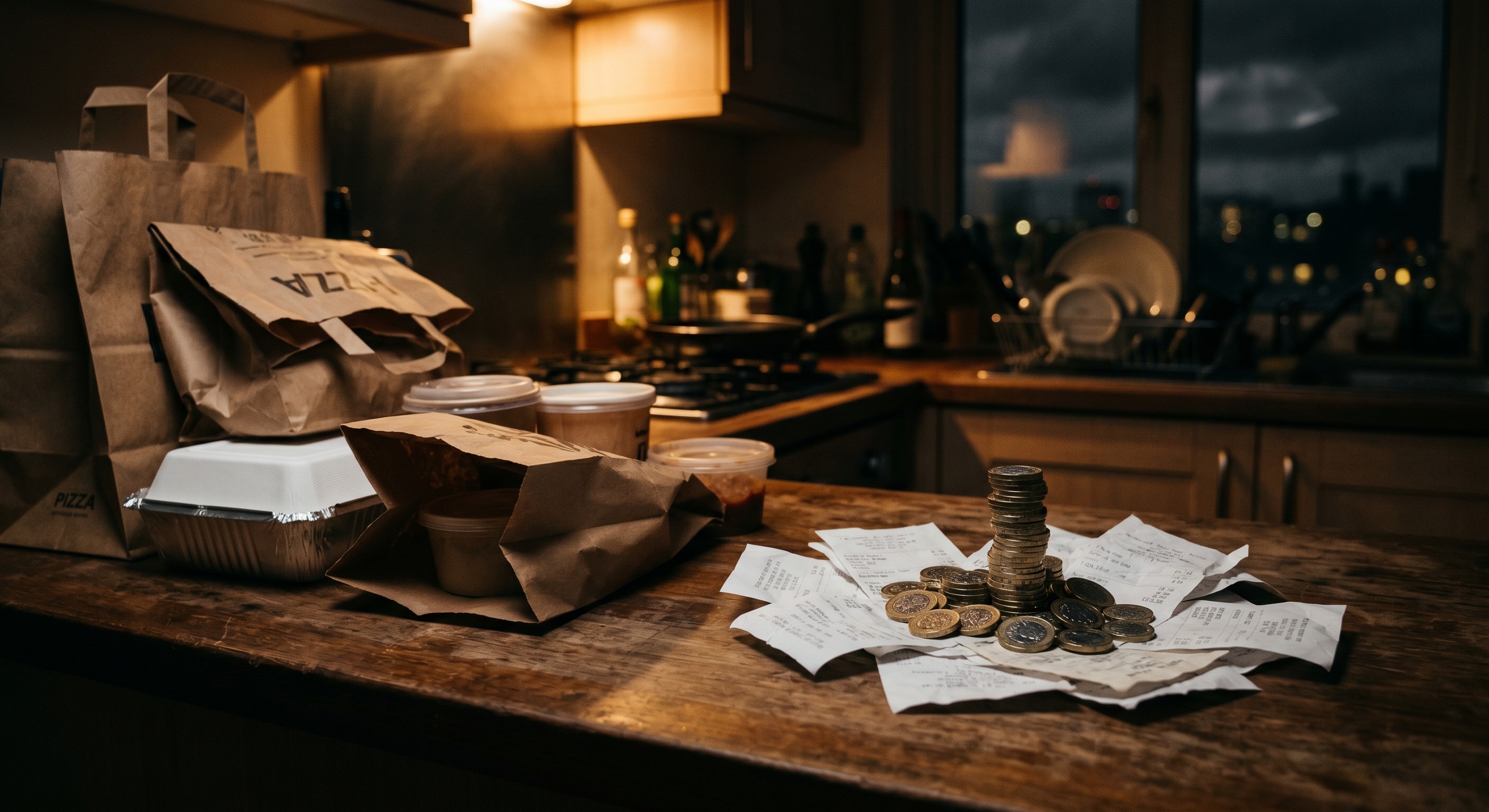
But the hidden cost is decision fatigue. Every time you open the fridge and see chaos, your brain has to work harder. You end up ordering takeaway not because you're lazy, but because you're overwhelmed.
A well-organised fridge makes cooking easier, faster, and more appealing.
Your Five-Minute Action Plan
Start small. You don't need a complete kitchen overhaul—just one change this week:
• Create your Use-First shelf today
• Set a Sunday evening alarm for a fridge reset
• Screenshot one rescue meal formula and pin it to your phone
That's it. No fancy containers, no label-maker, no Instagram-worthy overhaul.
Just visibility, rhythm, and a plan for when things go sideways.
Your fridge doesn't need to be perfect. It just needs to work for you—not against you.
Because the £40 you save this month isn't just money. It's proof that small systems beat good intentions every single time.