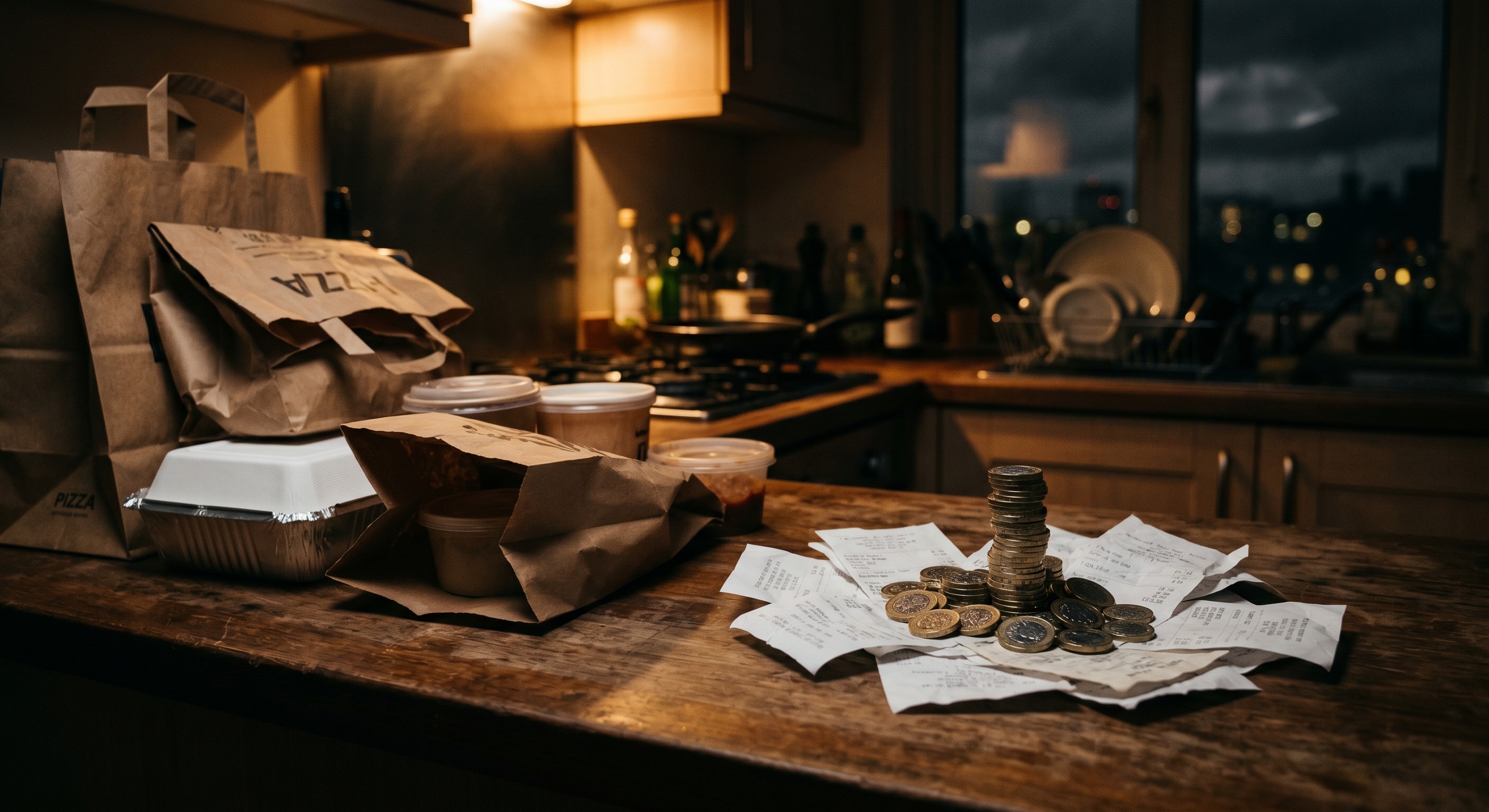
It's 7 p.m. on a Thursday. You're exhausted, the fridge feels miles away, and your phone is right there with that takeaway app glowing like a beacon of hope. One tap, twenty minutes, and dinner is solved.
Except it's not just solved—it's also costing you far more than the number on your receipt.
The Obvious Cost: Your Bank Account
Let's start with the math you already know but probably avoid calculating. The average takeaway in the UK costs between £10-15 per person. If you order twice a week, that's £80-120 monthly—nearly £1,000-1,500 annually.
But here's the kicker: that figure doesn't include delivery fees, service charges, or the 'might as well add sides' mentality that inflates every order. Suddenly, your £12 pad thai becomes £18 with all the extras.
Compare that to cooking at home. A hearty vegan curry with chickpeas, coconut milk, and rice? About £2-3 per serving. The same meal you'd pay £12 for delivered.
Chef's Reframe: Every takeaway you skip and cook yourself is money you've just earned—tax-free.
The Hidden Cost: Your Health Tax
Most takeaway meals are engineered for one thing: taste that keeps you coming back. That means excess salt, sugar, unhealthy fats, and portion sizes designed to feel indulgent, not nourishing.
A single restaurant meal can contain your entire daily sodium allowance. Regular consumption is linked to weight gain, high blood pressure, and increased risk of chronic diseases. You're not just paying with pounds—you're paying with your long-term wellbeing.
When you cook at home, you control the ingredients. You choose the oil, the salt, the vegetables. You decide the portion. That control is priceless.
The Invisible Cost: Time You Think You're Saving
Here's the irony: ordering takeaway doesn't actually save much time. You spend 10 minutes browsing menus, debating options, and waiting for delivery. Add in the inevitable 'running late' text from your driver, and you're easily at 40-60 minutes.
A simple stir-fry with tofu and vegetables? Fifteen minutes, start to finish.
Most people overestimate how long cooking takes and underestimate how long ordering out actually takes. Once you have a few go-to recipes in your back pocket, you'll wonder why you ever waited around for soggy fries.
The Environmental Cost: Packaging Pileup
Every takeaway comes with a mountain of packaging—plastic containers, foam boxes, single-use cutlery, napkins you never asked for. Even 'eco-friendly' packaging often can't be recycled in practice and ends up in landfill.
If you order twice a week, that's over 100 meals' worth of waste each year. Cooking at home eliminates nearly all of it. Your ingredients come in minimal packaging, and your leftovers go in reusable containers.
It's a small shift with a big environmental payoff—and it aligns perfectly with the values that likely brought you to plant-based eating in the first place.
The Opportunity Cost: Skills You're Not Building
Every time you order out, you miss a chance to build confidence in the kitchen. Cooking is one of the most valuable life skills—it saves money, boosts health, impresses friends, and gives you creative control over what you eat.
But here's the secret: you don't need to be a chef. You just need five reliable recipes you can make with your eyes closed. Once you have those, takeaway stops being a necessity and becomes an occasional treat.
The confidence you gain from nailing a homemade pizza or perfecting a creamy pasta sauce? That's a return on investment no app can offer.
The Emotional Cost: Decision Fatigue and Guilt
There's a psychological toll to relying on takeaways. You feel guilty about the money. You feel sluggish after the meal. You feel frustrated that you 'should' cook more but can't seem to make it happen.
And every time you open that app, you face decision paralysis: Thai or Indian? This restaurant or that one? What if it's not good? It's exhausting.
Cooking removes that loop. When you have a plan and a simple recipe, dinner becomes automatic. Less stress, less guilt, more satisfaction.
How to Break the Takeaway Habit (Without Feeling Deprived)
You don't need to quit takeaways cold turkey. Start by replacing just one order per week with a homemade version of something you love. Craving pizza? Make a simple flatbread with marinara and roasted veggies. Missing Chinese? Whip up a ginger-soy noodle bowl.
Here are three strategies that make cooking easier than ordering:
• Batch-cook on Sundays: Make a big pot of chili, curry, or soup. Portion it out. Reheat throughout the week.
• Keep a 'emergency meal' kit: Pasta, jarred marinara, frozen veggies, and canned chickpeas. Dinner in 12 minutes.
• Use the 'fakeaway' mindset: Recreate your favorite takeaway at home. It's fun, cheaper, and you control the ingredients.
The Real Win: Freedom and Control
When you cook at home, you're not just saving money—you're reclaiming autonomy. You decide what goes into your body. You know exactly where your money goes. You reduce waste, build skills, and feel genuinely good about what you're eating.
Takeaways will always have their place—birthdays, celebrations, the occasional 'I truly cannot be bothered' night. But when they become your default, they quietly drain your wallet, energy, and peace of mind.
The next time you reach for your phone at 7 p.m., pause. Ask yourself: what could I make in the time it takes for delivery to arrive?
You might be surprised by the answer—and by how much better you feel when you choose the kitchen over the app.


