If you've ever stared into your refrigerator at 6 PM, exhausted and hungry, asking yourself 'what's for dinner?' for the thousandth time—you already know the problem. It's not that you lack recipes. It's that you lack a system.
Decision fatigue is real, and it hits hardest when you're tired, hungry, and standing in a kitchen full of ingredients that somehow feel impossible to combine. The daily scramble to figure out what to eat drains your energy before you even start cooking.
The solution isn't to collect more recipes or meal prep harder.
The solution is to build a system that removes the guesswork entirely—so dinner becomes automatic, not agonizing.
Why 'winging it' never works long-term
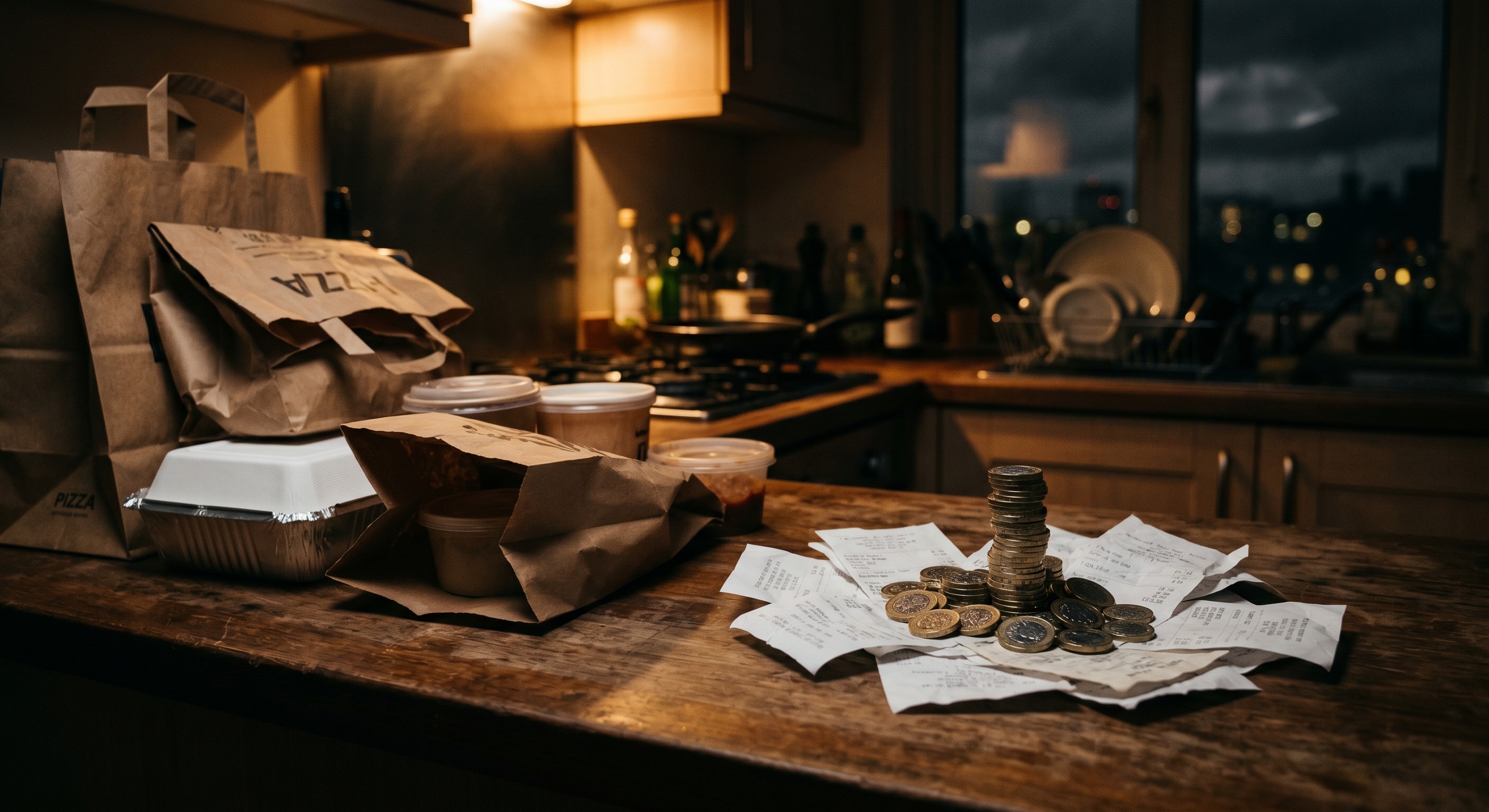
Winging dinner feels flexible and freeing—until life gets busy. Then it becomes a nightly source of stress. Without a plan, you end up defaulting to the same three meals, ordering takeout more than you'd like, or letting produce rot in the crisper drawer.
The problem isn't your willpower or creativity. It's that willpower and creativity are finite resources. When you spend them deciding what to eat every single night, you have less left for everything else.
A system, on the other hand, conserves your mental energy. It turns dinner from a daily decision into a pre-made choice—freeing you to focus on cooking, not planning.
What a dinner system actually looks like
A dinner system doesn't mean eating the same thing every night. It means creating a repeatable framework that guides your choices without requiring constant thought.
Here's the basic structure:
• Theme nights: Assign a cuisine or format to each day (Taco Tuesday, Stir-Fry Wednesday, Pasta Thursday, Bowl Night Friday, etc.)
• Core recipes: Keep 3–5 go-to recipes per theme that you can rotate
• Ingredient anchors: Stock staples that support multiple themes (canned beans, grains, frozen vegetables, tofu, pasta, tortillas)
When you walk into the kitchen on Wednesday, you're not starting from scratch. You already know it's stir-fry night. You just need to pick your protein, vegetable, and sauce—all of which you have on hand because they're part of your system.
How to build your own system in three steps
Step 1: Audit your current rotation
Start by writing down the 10–15 meals you already make regularly. Don't overthink it—just list what you actually cook, not what you wish you cooked. These are your anchor meals.
Look for patterns. Do most of your meals fall into categories like bowls, pastas, tacos, soups, or stir-fries? These patterns become your themes.
Step 2: Assign themes to weeknights
Pick 5–7 broad themes that match your cooking style and schedule. Monday might be 'One-Pot Night' because you're tired. Friday might be 'Pizza or Flatbread Night' because you want something fun and easy.
Themes should be flexible, not restrictive. They're guides, not rules. If you don't feel like pasta on Thursday, swap it with Friday's theme. The point is to narrow your options, not eliminate them.
Step 3: Stock your pantry to support the system
Your grocery list should reflect your themes. If you know Tuesday is Taco Night, you'll always have tortillas, beans, salsa, and avocado. If Wednesday is Stir-Fry Night, you'll stock soy sauce, rice, frozen vegetables, and tofu or tempeh.
This doesn't mean you shop the exact same way every week. But it does mean you're shopping with intention—buying ingredients that slot into your system rather than random items that sound good in the moment.
The mental shift: from 'what do I feel like?' to 'what's the theme?'
The hardest part of building a system isn't the logistics—it's the mindset change. You're training yourself to stop asking an open-ended question ('what should I make?') and start asking a bounded one ('what do I feel like making within tonight's theme?').
This small shift eliminates decision paralysis. Instead of scanning through hundreds of possible meals, you're choosing from three or four. Your brain can handle that—even on a Tuesday at 6 PM.
Chef's Reframe: A system isn't about restriction—it's about removing the friction between 'I'm hungry' and 'dinner is ready.'
Fine-tuning your system over time
Your system will evolve. After a month, you'll notice which themes you love and which feel like a chore. Maybe Soup Night always drags because you don't love soup. Swap it for Sandwich & Salad Night instead.
The goal isn't perfection—it's consistency. A system you follow 80% of the time is infinitely better than a plan you abandon after two weeks because it felt too rigid.
Pay attention to what makes dinner easier for you. Do you cook better with a detailed plan, or do you prefer loose guidelines? Do you batch-cook on Sundays, or do you like cooking fresh every night? Let your system reflect your reality, not someone else's ideal.
What changes when you stop deciding every night
When you build a system, dinner stops being a source of stress and starts being predictable in the best way. You grocery shop faster because you know what you need. You waste less food because you're buying with purpose. You cook more confidently because you're working within familiar frameworks.
And most importantly, you reclaim the mental energy you were spending on 'what's for dinner?' and redirect it toward literally anything else.
That's not laziness. That's efficiency. That's taking care of yourself by designing a life that doesn't require constant decision-making just to eat.
Start small, build from there
You don't need to overhaul your entire week tonight. Start with one or two theme nights. Try Taco Tuesday and Pasta Thursday for a month. See how it feels to remove just two decisions from your week.
Once those nights feel automatic, add another. Then another. Before long, you'll have a full system—one that works for you, not against you.
Because the goal was never to have the perfect meal plan. The goal was to stop asking 'what's for dinner?'—and start knowing the answer before the question even comes up.